← All publications

Research Papers

  • The Cartography of Erasure: Archiving Sound and Mobility in Genocide
    2025Research Papers

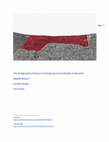
    The Cartography of Erasure: Archiving Sound and Mobility in Genocide

    Archive Stories

    This essay examines the cartographic practices of settler-colonial regimes, focusing on the ways in which mapping is deployed as a tool of erasure, domination, and spatial restructuring. Through critical analysis of historical and contemporary cartographic techniques, the study interrogates how maps not only represent space but actively participate in its reconfiguration by obscuring indigenous presence, reconfiguring territorial boundaries, and legitimizing colonial control. Drawing on interdisciplinary perspectives from geography, history, and critical cartography, the essay argues that cartography serves as both an instrument of erasure and a site of contestation.

  • Towards Contestation Through Movement and Substance Against Colonial Spatial-Geographic Hegemony
    2025Research Papers

    Towards Contestation Through Movement and Substance Against Colonial Spatial-Geographic Hegemony

    مجلة الجنوب للدراسات التحررية

    This paper examines Land and Territory as tools that formed primitive mechanisms for later technologies of self-discipline and taming of movement, which intersected in the settler colonial context to dominate indigenous bodily movement. Movement is a colonial material subject to domination, and non-negotiable within the Zionist colonial machine except under its own conditions of production. The paper analyzes how movement functions as a field of colonial violence while simultaneously producing counter-knowledge and anti-colonial subjectivity, drawing on Arab-Islamic philosophy regarding substance and movement.

  • How Do We Add Zero?
    2025Research Papers

    How Do We Add Zero?

    مجلة الدراسات الفلسطينية، العدد 141

    Written about Elias Khoury at his incomplete departure from us, published in the Journal of Palestine Studies, Issue 141, Winter 2025. Also written on the margins of a research project titled "On Death Suspended in Space," an attempt to produce a spatially and narratively composite map of Beirut based on the materiality of everyday thought as described by Mahdi Amel.

  • Palestinian Space in the Time of Genocide: Introduction to a Spatial Resistance to Colonialism, War, and Genocide
    2024Research Papers

    Palestinian Space in the Time of Genocide: Introduction to a Spatial Resistance to Colonialism, War, and Genocide

    مجلة الدراسات الفلسطينية - العدد 140

    This introduction, written as a conceptual entry to the file of Issue 140 of the Journal of Palestine Studies titled "Land, Human and Place in Genocide," examines representations of the concept of colonized space in Palestine, encompassing indigenous geography and existence, from literature and symbol to infrastructure and history.

  • Resili[stan]ce: Politics of Exile and Decolonizing Space/Design (A Deleuzian Approach)
    2024Research Papers

    Resili[stan]ce: Politics of Exile and Decolonizing Space/Design (A Deleuzian Approach)

    Arab American University & The New School – NYU (Eye on Palestine Program)

    A concept note for the Eye on Palestine Program – International Summer School, developed for the Arab American University & The New School - New York University, 2024. Examines the politics of exile and decolonizing space/design through a Deleuzian philosophical framework.

  • Where Does Urbicide Begin? A Comparative Introduction to Spatial Erasure Policies in the Israeli Occupation System, Ending in Gaza
    2024Research Papers

    Where Does Urbicide Begin? A Comparative Introduction to Spatial Erasure Policies in the Israeli Occupation System, Ending in Gaza

    إضافات

    Starting from the reality of the Israeli genocide war in Gaza (2023–), this paper investigates the modern roots of the city and the modern war machine, presenting the concept of Territory as a fundamental tool for building the colonial condition, specifically the modern city. Comparing urban and planning policies in Jaffa and Beer Sheba with Gaza at war, it proposes a conceptualization of urbicide in the colonial system, arguing that ongoing genocide mirrors the ongoing Nakba as a spatial policy of negating Palestinians.